
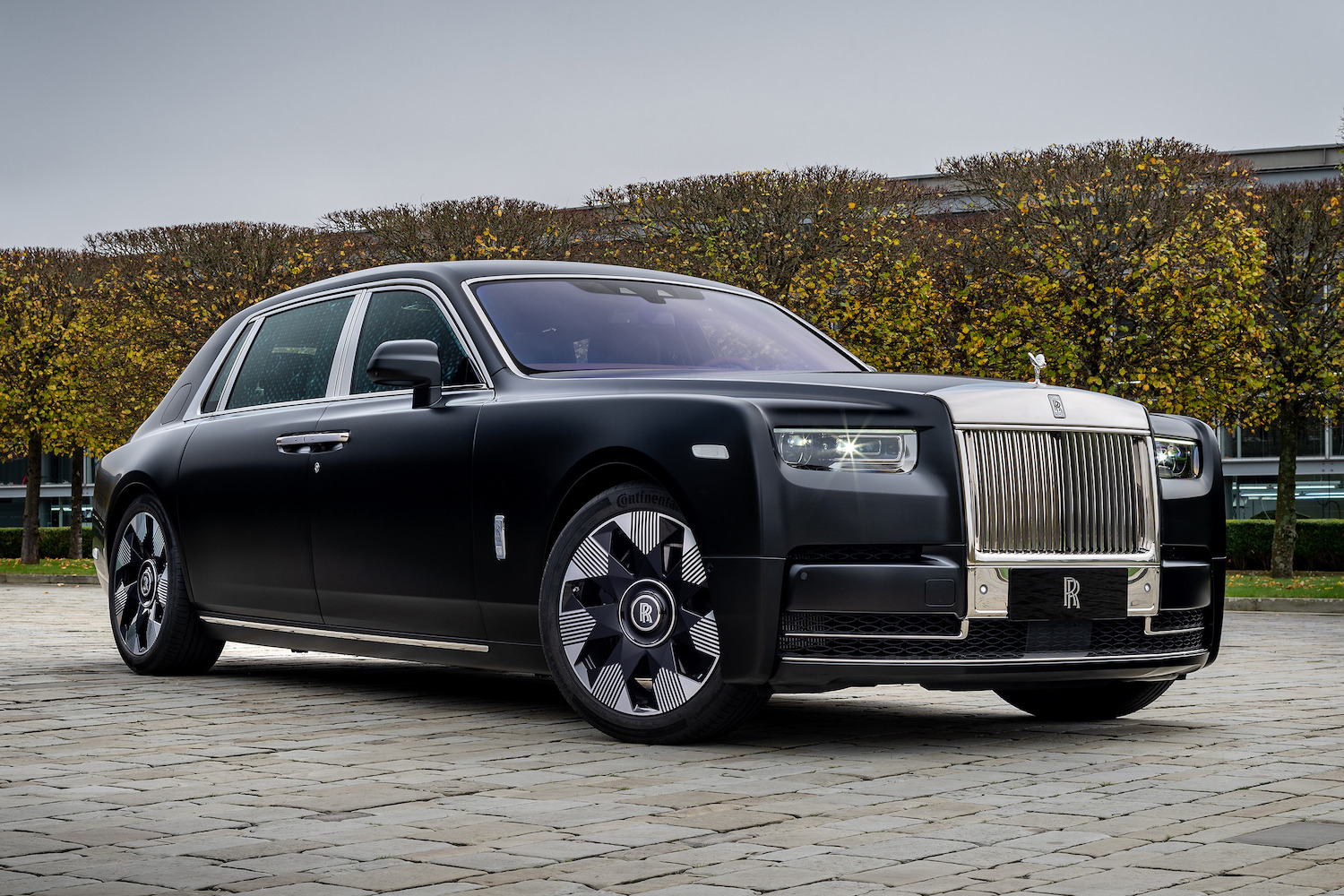
The Rolls-Royce Phantom represents the pinnacle of ultra-luxury automotive engineering. As the brand’s flagship sedan, the Phantom is designed not around performance metrics, but around presence, craftsmanship, and absolute comfort. Since its modern revival in 2003 under BMW ownership, the Phantom has become the benchmark for executive luxury worldwide.
Production span (modern era): 2003–present
Generations:
- Phantom VII (2003–2017) – Offered as standard wheelbase, Extended Wheelbase (EWB), Coupé, and Drophead Coupé.
- Phantom VIII (2018–present) – Fully redesigned aluminum platform with updated technology and improved refinement; available in standard and EWB.
Powertrain:
- 6.75L V12 (naturally aspirated in VII, twin-turbocharged in VIII)
- Automatic transmission only
- Rear-wheel drive
The Phantom is less about acceleration numbers and more about silent power delivery, ride isolation, and bespoke craftsmanship.
Current Market Value & Pricing Analysis
The Phantom market varies dramatically by generation, body style, condition, and specification.
Phantom VII (2003–2017)
Average market value: ~$130,000
| Variant | Estimated Value Range |
|---|---|
| Early VII Sedan (2004–2008) | $40,000 – $90,000 |
| Late VII / Series II (2012–2017) | $110,000 – $180,000 |
| Phantom Coupé | $180,000 – $300,000+ |
| Phantom Drophead Coupé | $200,000 – $400,000+ |
Early sedans have largely bottomed out in depreciation, but condition and service history dramatically impact value.
Phantom VIII (2018–Present)
Average market value: ~$265,000
| Variant | Estimated Value Range |
|---|---|
| Phantom VIII Sedan | $185,000 – $300,000 |
| Phantom VIII EWB | $225,000 – $350,000+ |
New MSRP typically ranges from $500,000+ depending on configuration, meaning significant depreciation occurs in the first 5–7 years.
Ownership Costs & Maintenance
Owning a Phantom requires serious financial commitment beyond the purchase price.
Typical Costs:
- Annual service: $3,000 – $6,000
- Tires: $2,000+ per set
- Brake service: $4,000+
- Electronics and comfort systems: Highly complex; repairs can be costly
Common Ownership Considerations:
- Suspension systems must remain in top condition for ride quality.
- Interior materials (leather, wood veneers, headliner) must be maintained carefully.
- Battery and electronic systems can cause issues if the car sits unused.
Insurance:
- Collector car policies can reduce cost for low-mileage usage.
- Standard policies remain high due to vehicle value.
Demand Factors & Collectibility
The Rolls-Royce Phantom occupies a unique niche in the ultra-luxury market.
Why it’s desirable:
- Ultimate status symbol
- Hand-built craftsmanship
- V12-powered flagship
- Bespoke interior and paint options
- Limited annual production volume
Strongest demand segments:
- Phantom VII Coupé and Drophead (limited production)
- Late-production Series II sedans
- Phantom VIII EWB with rare or tasteful specifications
Market sensitivity:
- Spec and presentation matter more than mileage alone.
- Two similar cars can vary in value by $50,000+ depending on condition and options.
Historical & Future Price Trends
| Year | Phantom VII Avg. | Phantom VIII Avg. |
|---|---|---|
| 2015 | ~$180,000 | N/A |
| 2020 | ~$120,000 | ~$300,000 |
| 2024 | ~$130,000 | ~$265,000 |
Early VII sedans experienced heavy depreciation from original $350k+ MSRPs but have largely stabilized.
Future projections (well-maintained examples):
| Year | Projected Value Range |
|---|---|
| 2025 | $130K – $300K |
| 2030 | $140K – $325K |
| 2035 | $160K – $375K+ (rare variants higher) |
Limited-production VII Coupé/Drophead models are expected to appreciate the strongest long-term.
Investment Outlook
Upside:
- VII Coupé and Drophead are modern collector pieces.
- VIII models will eventually benefit from “last big V12 luxury sedan” status.
- Flagship Rolls-Royce models historically maintain prestige.
Risks:
- High maintenance costs can exceed appreciation.
- Cosmetic reconditioning is expensive.
- Buyer pool is limited compared to sports cars.
- Depreciation still active on newer VIII examples.
Best strategy:
- Buy the best-spec, best-condition example available.
- Avoid neglected “cheap” cars.
- Favor limited-production variants or rare bespoke configurations.
- Plan for long-term ownership (5–10 years minimum).
Conclusion
The Rolls-Royce Phantom remains the ultimate expression of automotive luxury. While early Phantom VII sedans offer surprisingly accessible entry pricing, ownership costs must be respected. The strongest investment potential lies in limited-production VII Coupé and Drophead models, as well as pristine Phantom VIII EWB examples. For buyers on Global Autosports seeking presence, prestige, and long-term flagship status, the Phantom delivers unmatched luxury with measured appreciation potential.